
From the Sensex pack, Nestle India, HCL Technologies, Tech Mahindra, Bharti Airtel, Titan, Infosys, Asian Paints, NTPC, Bajaj Finserv and Sun Pharmaceuticals were among the laggards. State Bank of India, IndusInd Bank, Zomato, Power Grid, ICICI Bank, Tata Motors, Mahindra & Mahindra, Tata Consultancy Services and Adani Ports were the gainers.

Based on the new Swift hatch, 2012 Dzire is selling like pancakes.
Bringing curtains down on the glorious saga of the Maruti 800 model, Maruti Suzuki India has stopped production of the iconic car brand that had been carrier for millions of Indian middle class families, since last month, said senior official of the auto maker.

Automobile companies saw remarkable growth in sales in June.

Company has taken preliminary tests of 1,181 candidates from state ITI.

The Brezza is Maruti's answer to the Ford EcoSport and Mahindra TUV300 and was developed in India at a cost of Rs 860 crore.
MSIL has been asked to suggest a new formula.
The company sold 1,97,685 units of Dzire in 2013-14 fiscal.
The company sold 1,97,685 units of Dzire in 2013-14 fiscal.

In the next 2-3 years the company will pump in Rs 4,000 cr in product development, R&D and marketing infrastructure.

Following the July 18 violence, in which a senior company official was killed and 100 others injured, Maruti Suzuki India had decided to do away with contract workers at its production line.

The company had sold 85,669 units during the same month last year, Maruti Suzuki India said.
Maruti Suzuki India is gearing up to introduce by the end of this year a new 800cc car that is likely to be more fuel efficient, but also more expensive, than its existing best selling model Alto.
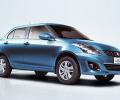
According to information available on the company's website, Swift, which was launched as a world strategic model in 2004, reached cumulative worldwide sales of four million units in August 2014 -- nine years and nine months since the start of sales in 2004.

While saying money was due from Suzuki, the HC told the tax department to determine an appropriate arm's-length pricing mechanism in this case.
These cars are priced between Rs 12 lakhs (Rs 1.2 million) and Rs 20 lakhs (Rs 2 million).
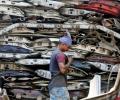
Ahead of the festive season, several passenger and commercial vehicle manufacturers have agreed to offer discounts of 1.5-3 per cent on new vehicle purchase against scrapped old vehicles after a meeting with Union Minister Nitin Gadkari, an official statement said on Tuesday. The statement further said Mercedes Benz India has offered a flat discount of Rs 25,000, which will be over and above all existing discounts. Union Road Transport and Highways (RT&H) Minister Nitin Gadkari on Tuesday chaired a meeting with the SIAM delegation at Bharat Mandapam, where he addressed pressing issues in the automobile industry.
The 1MW solar power plant has been set up at an investment of Rs 10.3 crore (Rs 103 million) and was commissioned this month, the company said in statement.

The initial public offer of Hyundai Motor India Ltd, the Indian arm of South Korean automaker Hyundai, received an 18 per cent subscription on the first day of bidding on Tuesday. The Rs 27,870 crore initial share sale received bids for 1,77,89,457 shares against 9,97,69,810 shares on offer, as per NSE data. The IPO received over 9 lakh applications on the first day.

The country's biggest carmaker is now more valuable than the combined market cap of the three leading automobile companies in the country: Tata Motors (Rs 1,18,684 crore), M&M (Rs 86,336 crore) and Ashok Leyland (Rs 34,700 crore).

Ciaz, the mid-sized sedan, was launched in October 2014.

MSI launched the Alto in September 2000. The company then introduced a 1,000-cc version of the car, the Alto K10, in August 2010.
Maruti Suzuki India, the country's largest carmaker, may after all do what everyone expects it to: take on Ratan Tata's Nano with its own low-price car. For long, there has been a will-they-won't-they kind of speculation about how Maruti will protect its entry-level consumer base from the Nano, whose lowest variant is likely to cost Rs 1 lakh in some places and about Rs 1.26 lakh in some others. The higher variants may cost Rs 1.5 lakh or more.
Appellate tribunal NCLAT on Monday stayed the Rs 200 crore penalty imposed by the Competition Commission on Maruti Suzuki but directed the car maker to deposit 10 per cent of the total amount within three weeks. The amount has to be deposited with the Registrar of the National Company Law Appellate Tribunal (NCLAT). A three-member NCLAT bench stayed the demand notice issued on October 27 to the car maker, subject to the condition of depositing 10 per cent of the penalty amount.

The 14-day-long strike at Maruti Suzuki India's Manesar's plant has been called off this morning following a tripartite agreement between the management, workers and the Haryana government.

Auto manufacturers have focused on launching CNG variants of their popular models to meet consumer demand for vehicles with lower running costs.

Known for its fuel efficient vehicles, car market leader Maruti Suzuki India is pushing it further to enhance mileage of its refreshed models.
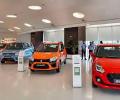
The stock of the country's largest passenger vehicle maker, Maruti Suzuki India (MSIL), has been hitting successive all-time highs over the past three trading sessions. The rally in the scrip has helped it notch over a 21 per cent gain since the start of February, outperforming the National Stock Exchange Nifty Auto Index. The gains for the leader of small passenger cars have been more recent, as the company still trails the Nifty Auto over one- and two-year periods.
The firm has suffered production loss of about 1,200 units, valued at around Rs 60 crore.

The country's biggest carmaker, Maruti Suzuki India, has raised concerns about the continuing slide in small car sales.

MSI expects the royalty paid to parent Suzuki Motor Corp to come down starting with its upcoming compact SUV as its engineers enhance their role in the joint development of future products.
Automobile companies put in an impressive show in April.

The company has in the meantime said the plant will remain closed.

The company had sold 92,161 units in the same month previous year, MSI said in a statement.
Compact segment sales rise 7.63%, mini segment registers 5.76% dip.

Currently, Maruti Suzuki has 14 car brands, but it has decided to expand into some new segments.

The other four models introduced with the alternative fuel option are compact cars Estilo and WagonR, multi-purpose vehicle Eeco and mid-sized sedan SX4.
The programme was initially launched by O Suzuki, chairman and chief executive officer, Suzuki Motor Corporation in Japan about a month back and has been replicated in the Indian operations as well. Each Maruti car has around 10,000 components and subcomponents that can be classified into 1500 categories.
Despite the current economic slowdown in the auto industry, the country's largest car maker, Maruti Suzuki India on Thursday said it will hire around 700 people in various departments in the next fiscal, even as it has raised its headcount by 745 in the current fiscal itself.
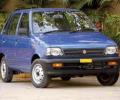
Maruti Suzuki produced 9,66,069 cars from January to December 2009, up 27 per cent from the year ago.
